The Return of the Mascot, and Why Grown Adults Are Crying About It
Somewhere between the third flat white and a regional airport departure lounge, I realised the mascot is back. Not the corporate cuddle monster of the early 2000s. Something weirder. More specific. Slightly unhinged in a way that feels… human.
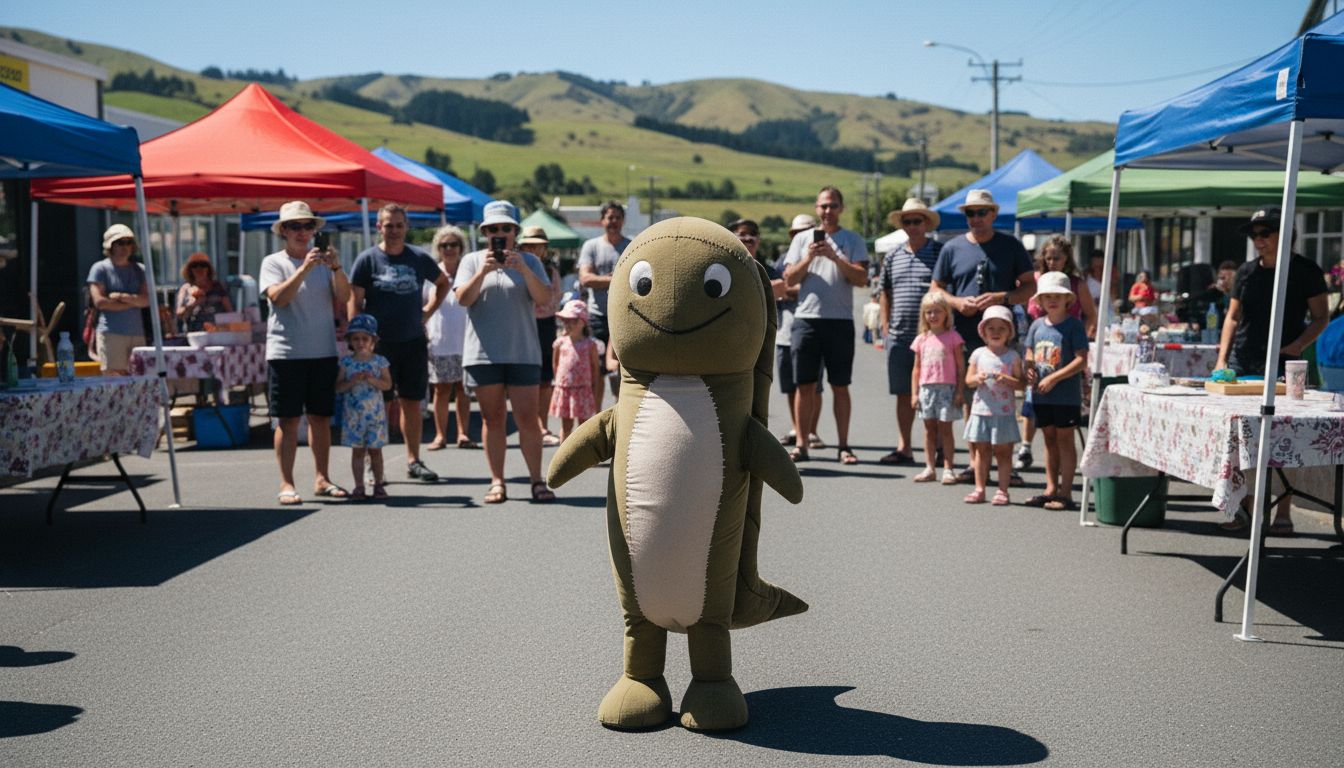
Over summer, a small-town cycling event in Wairarapa introduced a giant handmade eel named Trevor. Trevor has knees. Trevor has a nervous smile. Trevor hands out electrolyte sachets with the solemnity of a priest. The event sold out in 48 hours. Not because of Trevor alone, but because Trevor gave the whole thing a heartbeat. People took photos with him like he was an old school friend. Kids followed him. Adults did too, pretending it was for irony.
Agencies have been chasing “authentic connection” for a decade. Meanwhile, community organisers have quietly been sewing it. The new mascots are lumpy. They wobble. You can see the stitching. That is the point. In a year where every hospitality fit-out looks like it was assembled from the same Pinterest board, a slightly chaotic character feels radical. It says someone cared enough to make something specific. Not scalable. Not optimised. Specific.
I spoke to a creative director at a Wellington studio who recently convinced a national homewares chain, let’s call them Harbour & Field, to commission a roaming albatross for their winter sale tour. Not a slick costume shipped from overseas. A locally built bird with a backstory about losing its way and finding warmth indoors. Sales lifted, sure. But more interesting was the dwell time. People stayed. They chatted. They brought their parents back the next day to meet the bird. That is not performance marketing. That is theatre.
Here is the uncomfortable truth for the industry. We got very good at polishing the edges off everything. Mascots are the opposite of polish. They are commitment. They require someone inside the organisation to say, yes, we are willing to look slightly ridiculous in pursuit of joy. In 2026, that feels brave. And in a country that loves a sausage sizzle and a story, brave tends to win.
Trevor the eel will not change the GDP. But he will probably be back next summer, knees and all. And I would put money on the fact that more brands will be quietly commissioning their own strange, handmade companions. Not because it is a trend deck bullet point. Because it works. Because it makes people feel something. And that, finally, is the whole game.
Over summer, a small-town cycling event in Wairarapa introduced a giant handmade eel named Trevor. Trevor has knees. Trevor has a nervous smile. Trevor hands out electrolyte sachets with the solemnity of a priest. The event sold out in 48 hours. Not because of Trevor alone, but because Trevor gave the whole thing a heartbeat. People took photos with him like he was an old school friend. Kids followed him. Adults did too, pretending it was for irony.
Agencies have been chasing “authentic connection” for a decade. Meanwhile, community organisers have quietly been sewing it. The new mascots are lumpy. They wobble. You can see the stitching. That is the point. In a year where every hospitality fit-out looks like it was assembled from the same Pinterest board, a slightly chaotic character feels radical. It says someone cared enough to make something specific. Not scalable. Not optimised. Specific.
I spoke to a creative director at a Wellington studio who recently convinced a national homewares chain, let’s call them Harbour & Field, to commission a roaming albatross for their winter sale tour. Not a slick costume shipped from overseas. A locally built bird with a backstory about losing its way and finding warmth indoors. Sales lifted, sure. But more interesting was the dwell time. People stayed. They chatted. They brought their parents back the next day to meet the bird. That is not performance marketing. That is theatre.
Here is the uncomfortable truth for the industry. We got very good at polishing the edges off everything. Mascots are the opposite of polish. They are commitment. They require someone inside the organisation to say, yes, we are willing to look slightly ridiculous in pursuit of joy. In 2026, that feels brave. And in a country that loves a sausage sizzle and a story, brave tends to win.
Trevor the eel will not change the GDP. But he will probably be back next summer, knees and all. And I would put money on the fact that more brands will be quietly commissioning their own strange, handmade companions. Not because it is a trend deck bullet point. Because it works. Because it makes people feel something. And that, finally, is the whole game.