The Playbill Arms Race Hitting Provincial Theatre
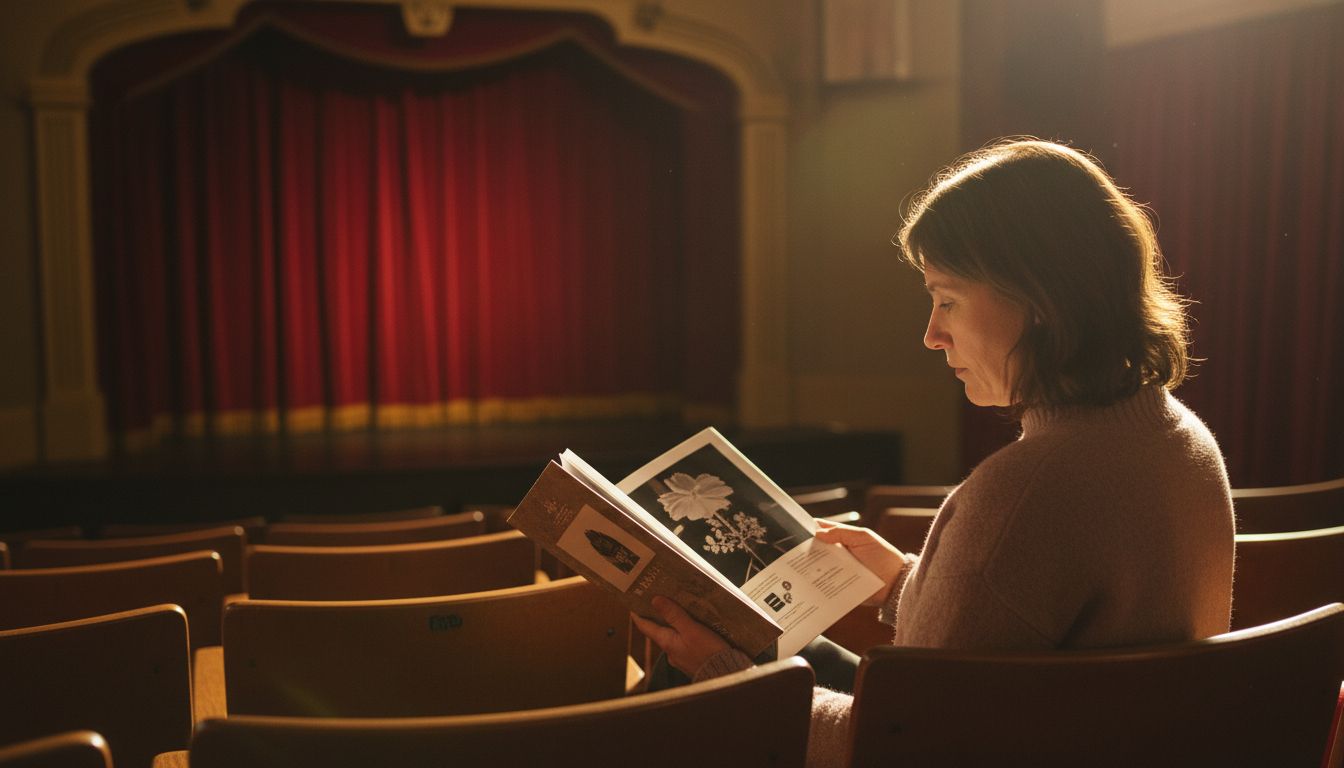
Something delightful is happening in our small-town theatres. The humble printed programme, once a folded A4 with a cast list and a note from the director, has turned into a full-blown brand battlefield. I started noticing it in Ōamaru, then again in Nelson, then in a converted hall in Southland with draughty curtains and impeccable ambition. The programmes are no longer informative. They are objects.
One recent example from a fictional but very convincing company called Lantern Wharf Players arrived as a 32-page stitched booklet, thick stock, moody photography of the rehearsal process, essays on the history of the play, and a wine pairing suggestion for interval. A wine pairing. For a community production. It was sponsored by a local ceramics studio that had its own two-page spread featuring actors holding handmade mugs like they were awards. The ads felt curated, not crammed in. Every sponsor aligned with the mood of the show. A gardening company appeared in a production set in an orchard. A surf school backed a seaside farce. It is strategic and oddly moving.
Here is the clever bit. These programmes are being kept. I have three on my coffee table right now. They look like small literary journals. They make the night feel significant, worth dressing up for. For sponsors, that is gold. Your logo does not get glanced at and tossed in a recycling bin. It sits in someone’s lounge for a month. Maybe longer. The theatre becomes a lifestyle signal. Not a dusty pastime, but a cultural anchor.
There is a lesson here for marketers who think scale is everything. Intimacy scales differently. When 180 seats are filled in Timaru, and every single person leaves with a beautifully considered artefact, that is not small. That is concentrated attention. Theatres have realised that brand is not just the poster out front. It is the thing you hold in your lap while the lights dim. And right now, in halls across the country, that lap is prime real estate.
One recent example from a fictional but very convincing company called Lantern Wharf Players arrived as a 32-page stitched booklet, thick stock, moody photography of the rehearsal process, essays on the history of the play, and a wine pairing suggestion for interval. A wine pairing. For a community production. It was sponsored by a local ceramics studio that had its own two-page spread featuring actors holding handmade mugs like they were awards. The ads felt curated, not crammed in. Every sponsor aligned with the mood of the show. A gardening company appeared in a production set in an orchard. A surf school backed a seaside farce. It is strategic and oddly moving.
Here is the clever bit. These programmes are being kept. I have three on my coffee table right now. They look like small literary journals. They make the night feel significant, worth dressing up for. For sponsors, that is gold. Your logo does not get glanced at and tossed in a recycling bin. It sits in someone’s lounge for a month. Maybe longer. The theatre becomes a lifestyle signal. Not a dusty pastime, but a cultural anchor.
There is a lesson here for marketers who think scale is everything. Intimacy scales differently. When 180 seats are filled in Timaru, and every single person leaves with a beautifully considered artefact, that is not small. That is concentrated attention. Theatres have realised that brand is not just the poster out front. It is the thing you hold in your lap while the lights dim. And right now, in halls across the country, that lap is prime real estate.