The Roundabout Wars: How Small-Town Art Became the Hottest Media Buy in 2026
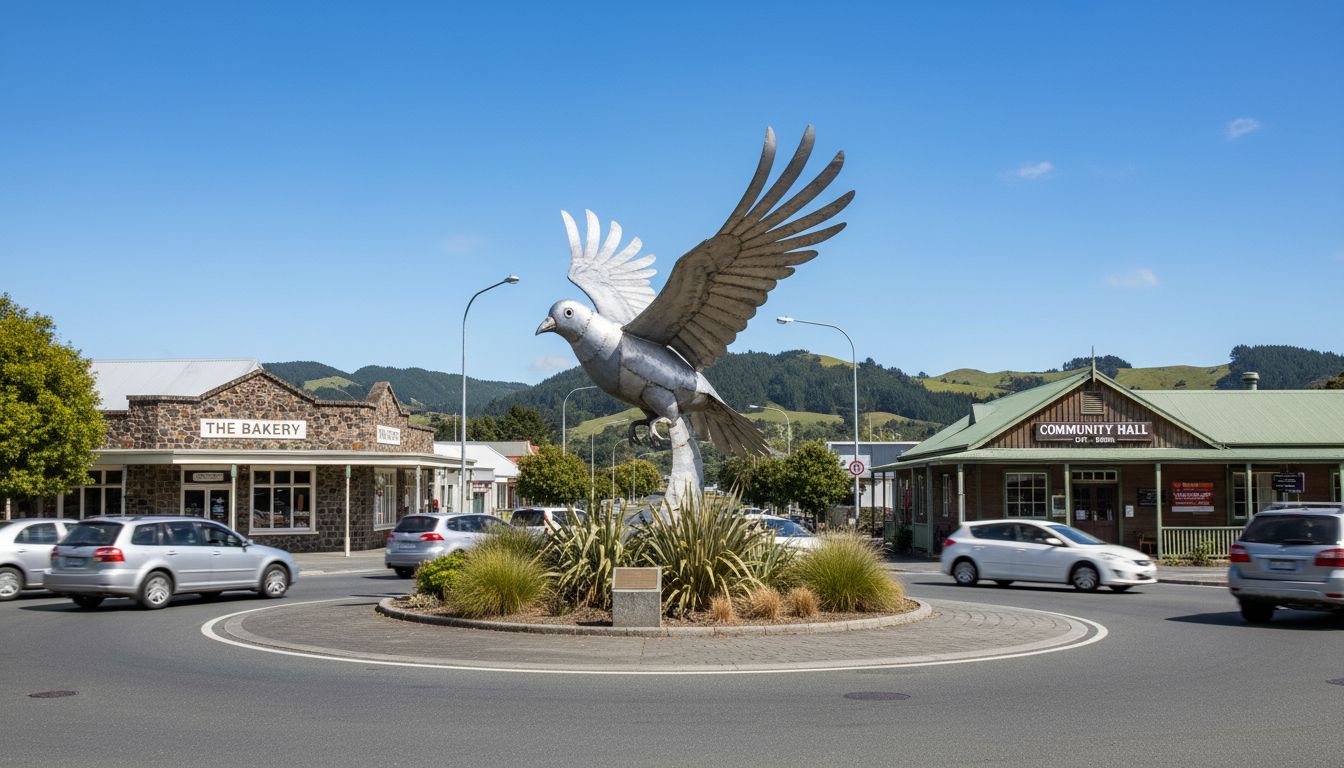
Somewhere between the third bakery and the community pool, the humble roundabout has become the most fought-over advertising space in New Zealand. Not with banners. Not with corflute. With sculpture.
Drive through almost any regional town right now and you will see it. A stainless steel stingray in Kāpiti. A towering stack of oversized paua shells in Southland. A suspiciously muscular sheep in inland Canterbury. None of these appeared by accident. They are funded, fiercely pitched, and quietly benchmarked. Local businesses are underwriting public art for the right to have their name etched on a modest plaque at the base, about the size of a lunchbox. No slogans. Just “Proudly supported by…” and a logo that has suddenly become part of the landscape.
It sounds quaint. It is not. Agencies are now preparing full creative decks just to win a roundabout. I sat in on one. There were traffic flow diagrams. Sun path studies. A heated debate about whether brushed aluminium feels more “coastal optimism” than powder-coated steel. The client, a regional insurance firm called Harbour & Field, wanted something “aspirational but sturdy”. They landed on a giant kererū mid-flight, wings stretched wide enough to command a 360-degree view from every entry point. The strategy was simple. If you can’t interrupt people, become the thing they look at while they wait.
And here is the twist. It works. Locals give directions using the artwork. Teenagers use it as a meeting spot. It ends up on tea towels, then in tourism brochures, then in the background of wedding photos. The sponsoring brand is never shouting, just gently present. In a media market where attention is rationed and audiences are tired, that kind of embedded visibility is gold. It is civic pride as media placement.
There is something deeply Kiwi about it. No chest beating. No glitter cannons. Just a slightly eccentric object in the middle of the road that everyone grows oddly fond of. We talk endlessly about purpose-driven marketing. This is it, poured in concrete and bolted down. The smartest marketers in 2026 are not chasing impressions. They are funding landmarks. And if that means arguing passionately about the wing span of a metal pigeon, so be it.
Drive through almost any regional town right now and you will see it. A stainless steel stingray in Kāpiti. A towering stack of oversized paua shells in Southland. A suspiciously muscular sheep in inland Canterbury. None of these appeared by accident. They are funded, fiercely pitched, and quietly benchmarked. Local businesses are underwriting public art for the right to have their name etched on a modest plaque at the base, about the size of a lunchbox. No slogans. Just “Proudly supported by…” and a logo that has suddenly become part of the landscape.
It sounds quaint. It is not. Agencies are now preparing full creative decks just to win a roundabout. I sat in on one. There were traffic flow diagrams. Sun path studies. A heated debate about whether brushed aluminium feels more “coastal optimism” than powder-coated steel. The client, a regional insurance firm called Harbour & Field, wanted something “aspirational but sturdy”. They landed on a giant kererū mid-flight, wings stretched wide enough to command a 360-degree view from every entry point. The strategy was simple. If you can’t interrupt people, become the thing they look at while they wait.
And here is the twist. It works. Locals give directions using the artwork. Teenagers use it as a meeting spot. It ends up on tea towels, then in tourism brochures, then in the background of wedding photos. The sponsoring brand is never shouting, just gently present. In a media market where attention is rationed and audiences are tired, that kind of embedded visibility is gold. It is civic pride as media placement.
There is something deeply Kiwi about it. No chest beating. No glitter cannons. Just a slightly eccentric object in the middle of the road that everyone grows oddly fond of. We talk endlessly about purpose-driven marketing. This is it, poured in concrete and bolted down. The smartest marketers in 2026 are not chasing impressions. They are funding landmarks. And if that means arguing passionately about the wing span of a metal pigeon, so be it.