The Strange Power of a Window Full of Useless Things
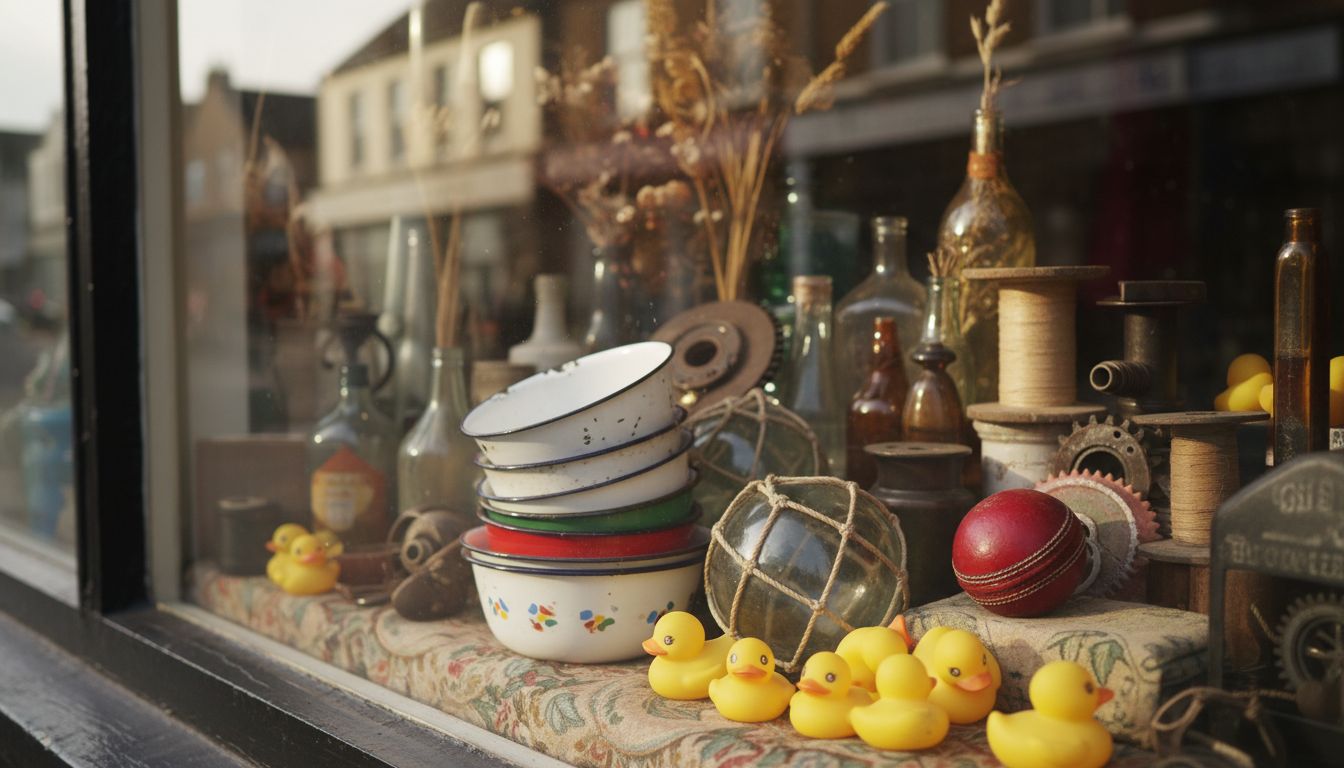
Walk past a small studio and you might see a window display that makes no sense at all. A stack of enamel bowls. A fishing float. Three identical plastic ducks facing the wrong direction. No price tags. No explanation. Just objects, arranged like someone had a very long afternoon and a slightly odd brain. I have become completely fascinated by these windows.
A quiet shift is happening in small creative shops and agencies. Instead of polished displays, they are building little puzzles. Collections of objects that feel accidental but are anything but. People stop. They stare. They take photos. A few walk in just to ask what on earth they are looking at. That moment, the question, is the marketing. It works because it treats curiosity as the media channel.
The clever bit is how these displays get built now. Not by copying trends, but by prompting AI to generate strange object combinations that feel almost meaningful. A prompt I like: "Invent a window display using 12 everyday items that suggests a story about ambition, but never directly explains it." The results are weirdly good. Old trophies next to gardening gloves. A row of alarm clocks set to different times. A cracked cricket ball sitting on velvet. Suddenly the window becomes a riddle people want to solve.
I think this will spread. Not as spectacle, but as small theatre. Offices, studios, even service businesses will treat their front windows like slow moving art projects. Rotating collections of objects that hint at ideas rather than shouting them. Marketing that rewards the passerby who pauses for ten seconds longer than usual. In a world where everything screams for attention, a quiet mystery in a window might be the most persuasive thing left.
A quiet shift is happening in small creative shops and agencies. Instead of polished displays, they are building little puzzles. Collections of objects that feel accidental but are anything but. People stop. They stare. They take photos. A few walk in just to ask what on earth they are looking at. That moment, the question, is the marketing. It works because it treats curiosity as the media channel.
The clever bit is how these displays get built now. Not by copying trends, but by prompting AI to generate strange object combinations that feel almost meaningful. A prompt I like: "Invent a window display using 12 everyday items that suggests a story about ambition, but never directly explains it." The results are weirdly good. Old trophies next to gardening gloves. A row of alarm clocks set to different times. A cracked cricket ball sitting on velvet. Suddenly the window becomes a riddle people want to solve.
I think this will spread. Not as spectacle, but as small theatre. Offices, studios, even service businesses will treat their front windows like slow moving art projects. Rotating collections of objects that hint at ideas rather than shouting them. Marketing that rewards the passerby who pauses for ten seconds longer than usual. In a world where everything screams for attention, a quiet mystery in a window might be the most persuasive thing left.