Why the Best Branding Lessons Come from Indie Snack Packaging
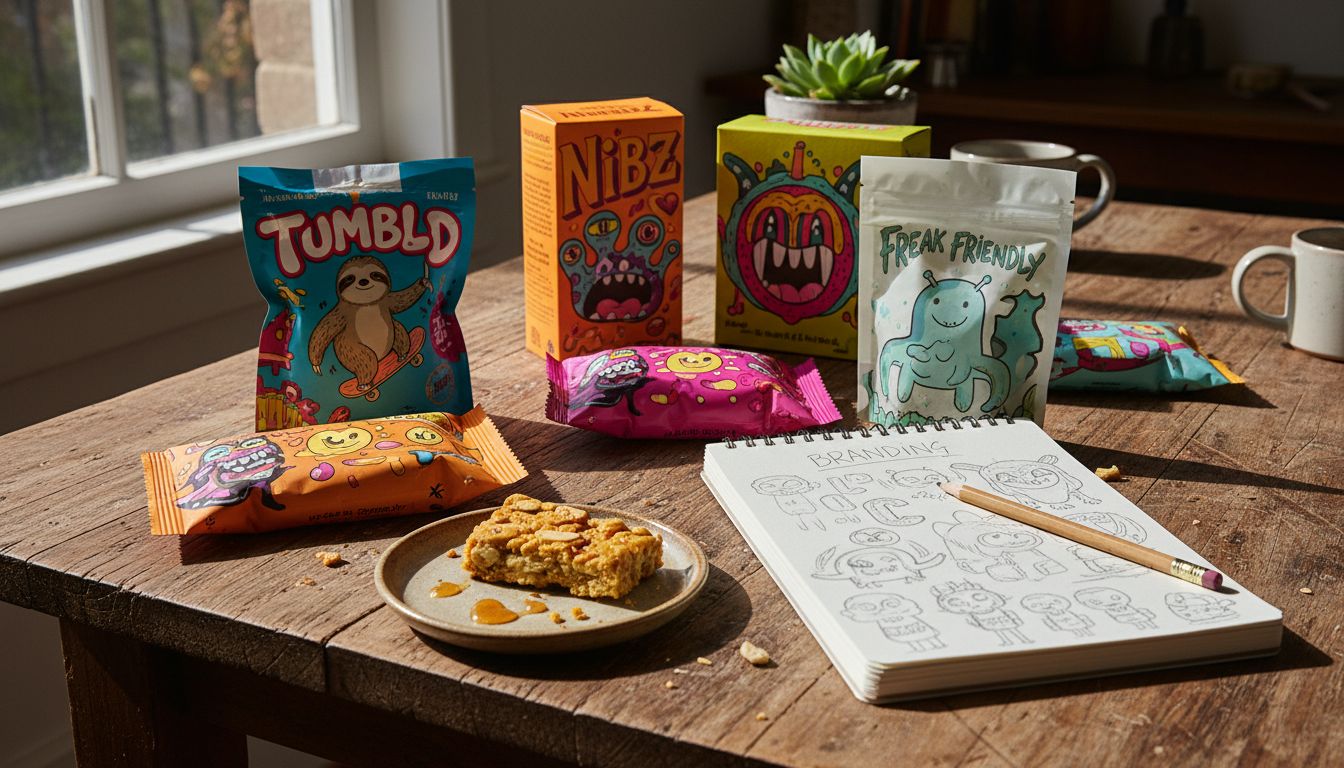
Let’s be honest. The best aisle in any artisanal grocer isn’t the cheese fridge or the loaded craft beer section. It’s the corner where they keep the awkwardly arranged, overpriced snacks made by startups with names like “Tumbld” or “Nibz”.
These snacks usually taste fine. Some are dry as sand, others are oddly sweetened with dates. But the packaging? It’s doing laps around the big players. These folks have two months of runway, no marketing team, and still manage to pull off brand moves that multinationals would toss into a year-long focus group vortex. One example: a turmeric cashew bar wrapped in a crinkly, muted lilac pouch, a hand-drawn guinea pig printed in one corner, the words “freak friendly” in lowercase Helvetica (yes, I know I said no font talk, but trust me, it wasn’t about the font). It felt weirdly confident. Nearly smug.
Here’s what I realised: when you don’t have money, you have to decide fast what you’re about. There’s no room for logic-layered messaging matrices. It’s just: what’s the story, what’s the vibe, let’s commit. That’s why so many snack brands are accidentally brilliant at visual storytelling. Their packaging doesn’t explain the product. It hints at a worldview. Something about late bicycle rides, or not owning a couch, or having a cat that also goes hiking. The best brand work lives in that emotional fuzz.
Big brands should take notes. Or better, send their CMOs and creative directors out to buy six random snack bags and take them seriously. Tape them to a board. Read them like literature. Somewhere in those tiny back-panels and esoteric copy blocks lies a reminder: marketing isn’t about saying everything, it’s about saying something, clearly. Even if that something is ‘we believe in beets’.
These snacks usually taste fine. Some are dry as sand, others are oddly sweetened with dates. But the packaging? It’s doing laps around the big players. These folks have two months of runway, no marketing team, and still manage to pull off brand moves that multinationals would toss into a year-long focus group vortex. One example: a turmeric cashew bar wrapped in a crinkly, muted lilac pouch, a hand-drawn guinea pig printed in one corner, the words “freak friendly” in lowercase Helvetica (yes, I know I said no font talk, but trust me, it wasn’t about the font). It felt weirdly confident. Nearly smug.
Here’s what I realised: when you don’t have money, you have to decide fast what you’re about. There’s no room for logic-layered messaging matrices. It’s just: what’s the story, what’s the vibe, let’s commit. That’s why so many snack brands are accidentally brilliant at visual storytelling. Their packaging doesn’t explain the product. It hints at a worldview. Something about late bicycle rides, or not owning a couch, or having a cat that also goes hiking. The best brand work lives in that emotional fuzz.
Big brands should take notes. Or better, send their CMOs and creative directors out to buy six random snack bags and take them seriously. Tape them to a board. Read them like literature. Somewhere in those tiny back-panels and esoteric copy blocks lies a reminder: marketing isn’t about saying everything, it’s about saying something, clearly. Even if that something is ‘we believe in beets’.