The Battle for New Zealand’s Most Important Carpet
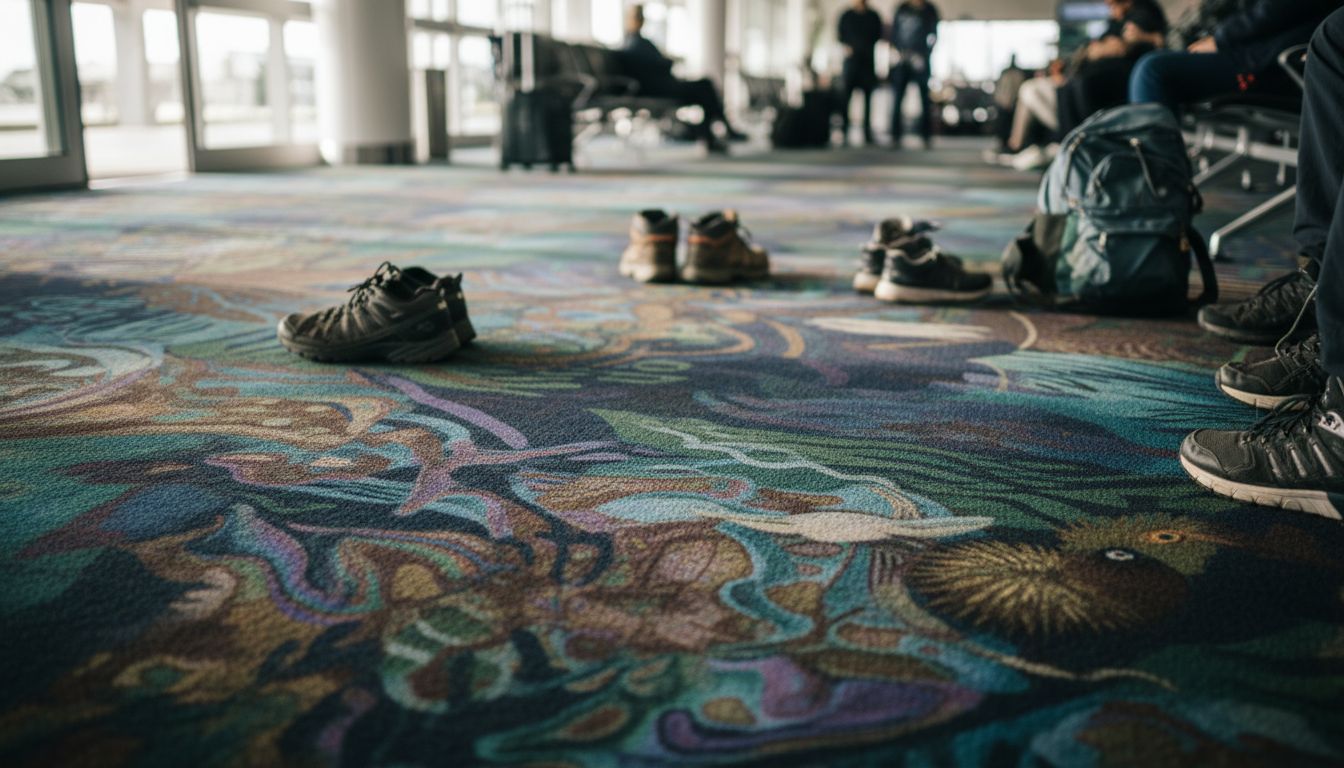
There is a quiet war happening on the floors of our regional airports. Not in the air. Not at the gate. On the carpet. I started noticing it in late 2025 when Kōwhai Air quietly redid the terminal at Te Puke Regional. The planes were the same. The coffee was still average. But the carpet was a fever dream of pāua swirls, braided rivers and tiny tūī silhouettes tucked into the pattern like easter eggs for bored travellers.
It sounds trivial until you stand there waiting for a delayed flight to Invercargill and realise you are photographing the floor. Kids were tracing the shapes with their shoes. Business travellers were actually looking down. Carpet used to be camouflage for chewing gum. Now it is a branding weapon. Not loud. Not shouty. Just deeply local. The design referenced orchards in blossom, the curve of the nearby estuary, even the geometry of old packhouse crates if you looked closely. Someone in that design team clearly went field tripping with a sketchbook and a thermos.
Other airports have clocked it. Last month, Harbourfield Terminal unveiled a pattern inspired by wind maps off the coast, all looping currents and subtle blues. No slogans. No corporate chest beating. Just texture and story under your feet. It does something clever. It slows people down without telling them to slow down. It makes the place feel considered. In a country where we bang on about sense of place, this is sense of place you can literally stand on.
Marketers love to talk about immersive experiences. Here is one that costs less than a TV campaign and lasts longer than a social post. A good carpet will see a decade of scuffed boots and still whisper the same story. In 2026, when attention is shredded and everyone is fighting for eyeballs, maybe the smartest move is to aim lower. Not in ambition. In altitude. Branding that meets you at ground level, and quietly insists you look down.
It sounds trivial until you stand there waiting for a delayed flight to Invercargill and realise you are photographing the floor. Kids were tracing the shapes with their shoes. Business travellers were actually looking down. Carpet used to be camouflage for chewing gum. Now it is a branding weapon. Not loud. Not shouty. Just deeply local. The design referenced orchards in blossom, the curve of the nearby estuary, even the geometry of old packhouse crates if you looked closely. Someone in that design team clearly went field tripping with a sketchbook and a thermos.
Other airports have clocked it. Last month, Harbourfield Terminal unveiled a pattern inspired by wind maps off the coast, all looping currents and subtle blues. No slogans. No corporate chest beating. Just texture and story under your feet. It does something clever. It slows people down without telling them to slow down. It makes the place feel considered. In a country where we bang on about sense of place, this is sense of place you can literally stand on.
Marketers love to talk about immersive experiences. Here is one that costs less than a TV campaign and lasts longer than a social post. A good carpet will see a decade of scuffed boots and still whisper the same story. In 2026, when attention is shredded and everyone is fighting for eyeballs, maybe the smartest move is to aim lower. Not in ambition. In altitude. Branding that meets you at ground level, and quietly insists you look down.