The Noticeboard Is the New Power Move
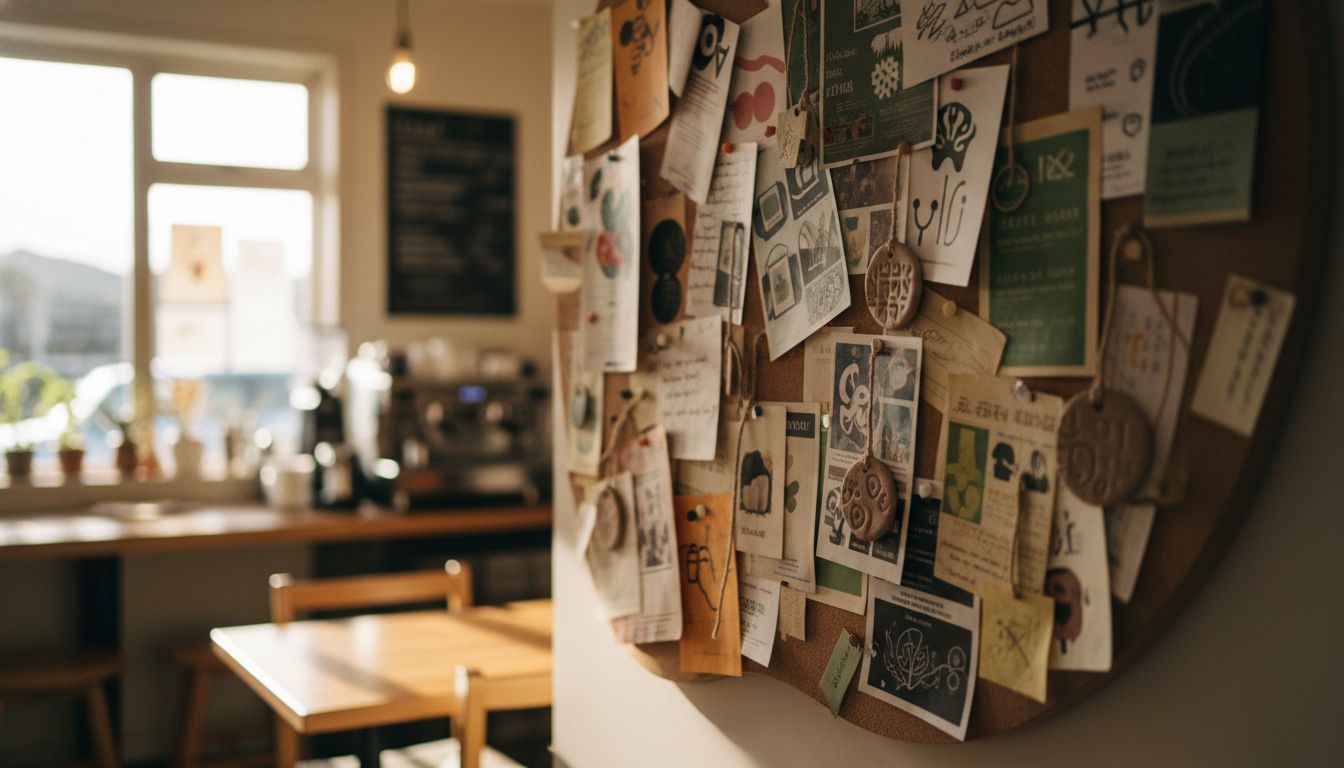
In a corner of a small bakery in Mount Eden, between a yoga class flyer and a lost cat named Trevor, there’s a masterclass in modern marketing. I’m serious. The humble corkboard, layered with crooked business cards and postcards printed on slightly too-thick stock, has become one of the most honest media channels in the country. And brands are clocking it.
Not the big ones. The nimble ones. The ceramics studio in Whanganui that pins a tiny square of clay with its class details stamped on the back. The boutique tour company in Bluff that attaches a hand-tied piece of twine so the card swings slightly when someone walks past. These are not accidents. They are engineered moments of interruption. You reach for a takeaway napkin, your eye catches texture, movement, something that feels like it was placed there by a human hand five minutes ago. Because it probably was.
What’s fascinating is the restraint. These businesses are not shouting. They are whispering in a room where whispering works. A beautifully printed A6 card with one confident line and a phone number can outperform a glossy spread because it feels local, immediate, almost conspiratorial. You found it. It wasn’t forced into your scroll. The best ones understand geography in an intimate way. Surf lesson cards only appear in dairy windows within walking distance of a beach. A life drawing night only pins up near apartments dense with twenty-somethings. Distribution is done on foot. That matters.
There is a lesson here for every agency that thinks scale is the only goal. Sometimes relevance is built one pin at a time. The noticeboard rewards craft, patience, and a willingness to be slightly imperfect. Corners curl. Pins clash. Layers build. And in that chaos, the brands that feel real win. If you want to know what New Zealanders actually care about in 2026, skip the dashboards. Go stand by the corkboard. Stay awhile. It’s all there.
Not the big ones. The nimble ones. The ceramics studio in Whanganui that pins a tiny square of clay with its class details stamped on the back. The boutique tour company in Bluff that attaches a hand-tied piece of twine so the card swings slightly when someone walks past. These are not accidents. They are engineered moments of interruption. You reach for a takeaway napkin, your eye catches texture, movement, something that feels like it was placed there by a human hand five minutes ago. Because it probably was.
What’s fascinating is the restraint. These businesses are not shouting. They are whispering in a room where whispering works. A beautifully printed A6 card with one confident line and a phone number can outperform a glossy spread because it feels local, immediate, almost conspiratorial. You found it. It wasn’t forced into your scroll. The best ones understand geography in an intimate way. Surf lesson cards only appear in dairy windows within walking distance of a beach. A life drawing night only pins up near apartments dense with twenty-somethings. Distribution is done on foot. That matters.
There is a lesson here for every agency that thinks scale is the only goal. Sometimes relevance is built one pin at a time. The noticeboard rewards craft, patience, and a willingness to be slightly imperfect. Corners curl. Pins clash. Layers build. And in that chaos, the brands that feel real win. If you want to know what New Zealanders actually care about in 2026, skip the dashboards. Go stand by the corkboard. Stay awhile. It’s all there.