The Rise of the Show Home That Feels Like a Holiday
Something strange is happening in the outer suburbs of our cities. The show home has gone from polite brochure in physical form to full-blown lifestyle theatre. Not techy, not flashy. Just deeply considered, slightly unhinged levels of detail.
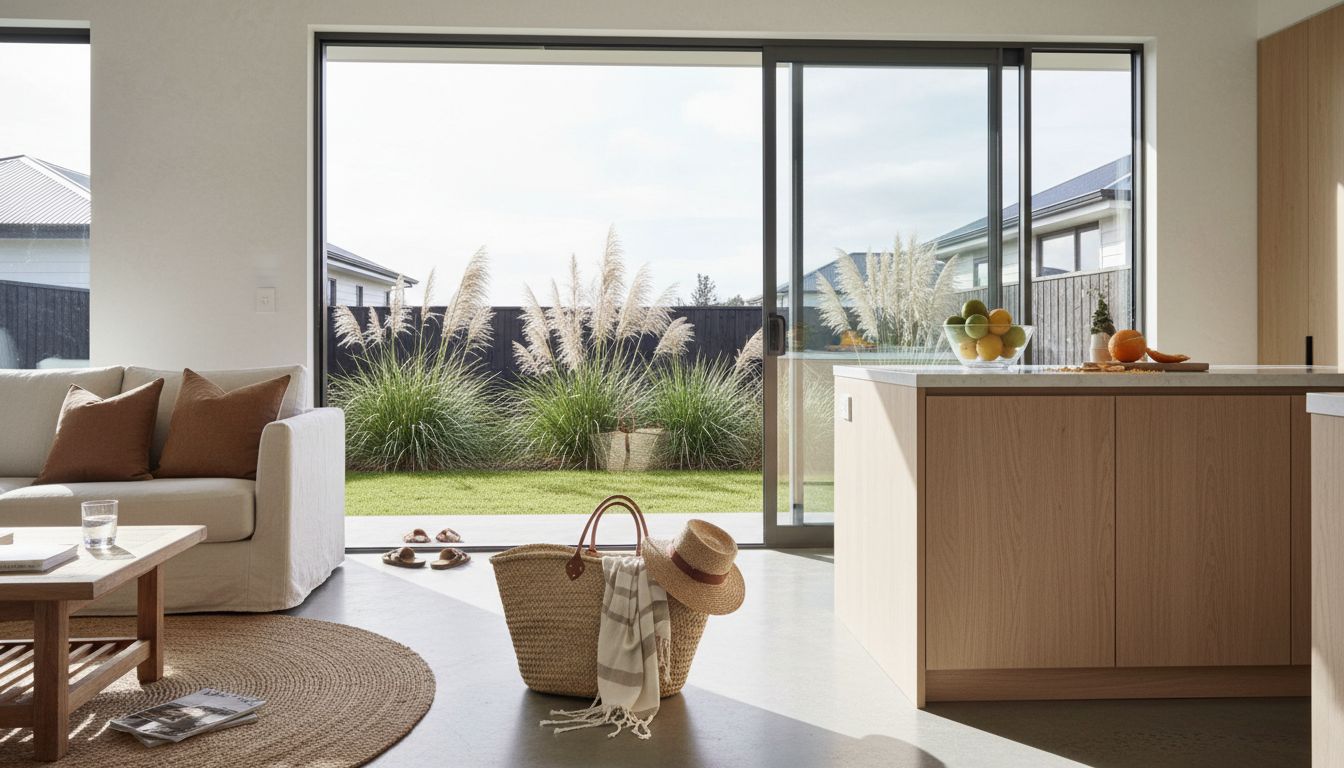
I visited a new subdivision on the edge of a mid-sized North Island town recently, purely out of nosiness. The first house had a bowl of lemons on the bench. Fine. The second had lemons, limes and a half-zested orange, as if someone had just dashed out to answer the door. The third had a beach bag by the ranch slider, sand dusted convincingly across a jute mat. The sales rep told me they refresh the sand twice a day. Twice. A day.
This is not styling. This is narrative engineering. The developers have realised buyers are not choosing cladding, they are choosing a version of themselves. The coastal runner. The sourdough parent. The couple who hosts long lunches that stretch into dusk. One home had a cookbook splayed open with handwritten notes in the margin. I checked. The handwriting was consistent across every property in the development. Someone has a brief, and it reads like a casting call.
Here is the clever bit. None of it feels expensive. It feels lived in, slightly chaotic, optimistic. That is the shift. In 2026, aspiration is not marble and height. It is ease. It is the suggestion that your life could be light, breezy, and permanently five minutes from a swim. Property marketing has finally understood that the product is not the house. It is the Saturday afternoon you imagine having in it. And right now, they are very, very good at selling Saturdays.
I visited a new subdivision on the edge of a mid-sized North Island town recently, purely out of nosiness. The first house had a bowl of lemons on the bench. Fine. The second had lemons, limes and a half-zested orange, as if someone had just dashed out to answer the door. The third had a beach bag by the ranch slider, sand dusted convincingly across a jute mat. The sales rep told me they refresh the sand twice a day. Twice. A day.
This is not styling. This is narrative engineering. The developers have realised buyers are not choosing cladding, they are choosing a version of themselves. The coastal runner. The sourdough parent. The couple who hosts long lunches that stretch into dusk. One home had a cookbook splayed open with handwritten notes in the margin. I checked. The handwriting was consistent across every property in the development. Someone has a brief, and it reads like a casting call.
Here is the clever bit. None of it feels expensive. It feels lived in, slightly chaotic, optimistic. That is the shift. In 2026, aspiration is not marble and height. It is ease. It is the suggestion that your life could be light, breezy, and permanently five minutes from a swim. Property marketing has finally understood that the product is not the house. It is the Saturday afternoon you imagine having in it. And right now, they are very, very good at selling Saturdays.