Why Every Shoe Store in New Zealand Looks Like a Lab Accident
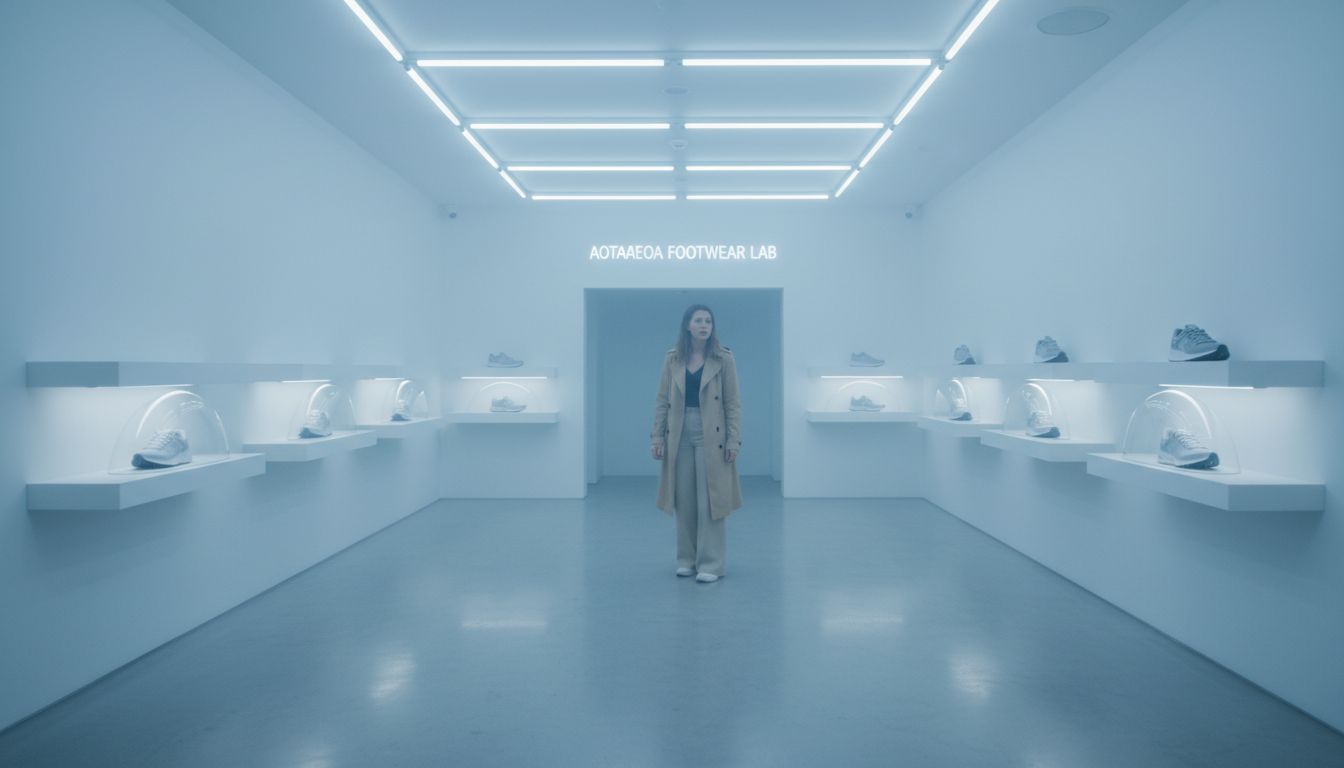
Here’s something I didn’t mean to notice. I was trying to buy court shoes — emphasis on trying — when it hit me. Not the perfect pair, but the fluorescent light. Shoe stores in New Zealand, nearly all of them, are aggressively white. Clinical. Like you’re preparing for surgery rather than an afternoon at the mall.
It’s not just aesthetic. It’s branding, and it’s saying something very weird. This same-shade-of-everything palette seems to be saying, “We do not trust you to choose shoes without error, so we’ve removed all visual distractions.” More Medicaid waiting room than fashion retail. It’s the tyranny of minimalism, but the uncharismatic, panicked kind — like someone learned the word ‘clean’ and took it too literally.
Contrast this with secondhand shops. Or the old Number One Shoes stores, with their chaotic signage and never-quite-right carpeting. Loud, unapologetic, somehow more alive. Those places were busy. Not just with people, but personality. There was an optimism to the disorder, a feeling that you might find the one mad pair you didn’t realise you’d been missing. Now, you get a pristine row of almond-toe sameness and leave with a headache.
This is a branding problem in drag. When retail design becomes so fixated on international best practice, it stops paying attention to local joy. New Zealanders are eclectic. We wear jandals with suits and do wedding photos in gumboots. Why are our shoe stores suddenly trying to look like Tokyo dental clinics? Someone, please, bring back the mess.
It’s not just aesthetic. It’s branding, and it’s saying something very weird. This same-shade-of-everything palette seems to be saying, “We do not trust you to choose shoes without error, so we’ve removed all visual distractions.” More Medicaid waiting room than fashion retail. It’s the tyranny of minimalism, but the uncharismatic, panicked kind — like someone learned the word ‘clean’ and took it too literally.
Contrast this with secondhand shops. Or the old Number One Shoes stores, with their chaotic signage and never-quite-right carpeting. Loud, unapologetic, somehow more alive. Those places were busy. Not just with people, but personality. There was an optimism to the disorder, a feeling that you might find the one mad pair you didn’t realise you’d been missing. Now, you get a pristine row of almond-toe sameness and leave with a headache.
This is a branding problem in drag. When retail design becomes so fixated on international best practice, it stops paying attention to local joy. New Zealanders are eclectic. We wear jandals with suits and do wedding photos in gumboots. Why are our shoe stores suddenly trying to look like Tokyo dental clinics? Someone, please, bring back the mess.