Why Every Café in Aotearoa Suddenly Has a Mascot
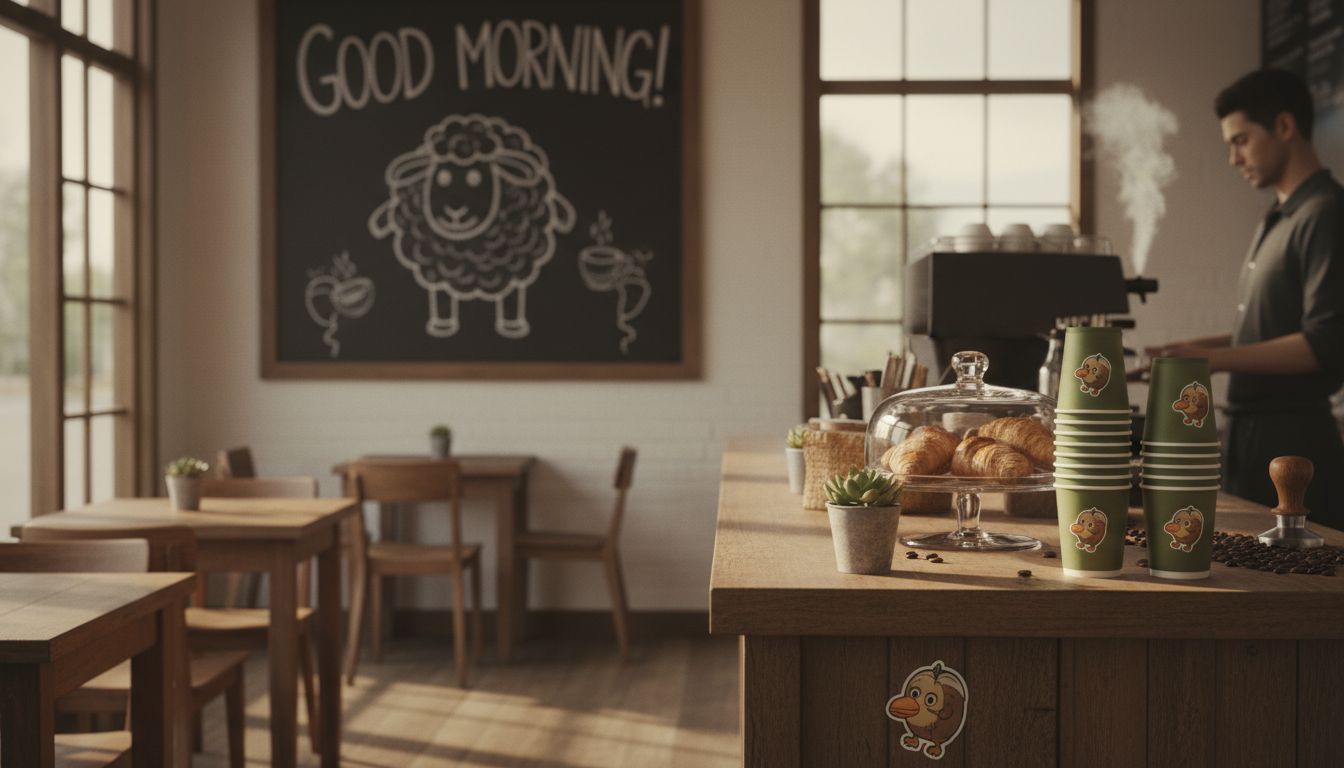
Somewhere between the second lockdown memory and our collective oat milk fatigue, cafés across New Zealand decided they needed a character. Not a logo tweak. Not a seasonal menu. A character. A plump orange cat called Basil. A moody kererū in sneakers. A badly behaved sheep named Trevor who only drinks single origin. I started noticing it in late 2025. By now, in 2026, it is practically civic policy.
Walk into any half-serious neighbourhood café and there is a mascot staring at you from a loyalty card, a takeaway cup, a chalkboard illustration. Not polished. Not corporate. Often a little odd. That is the point. These places are not selling coffee. They are selling a tiny universe. The mascot is the shortcut. It gives the flat white a backstory. It turns a cabinet scone into something Trevor would definitely approve of. Suddenly you are not just buying caffeine. You are participating in lore.
What fascinates me is how detailed these characters have become. I interviewed the owner of a small Wellington roastery, fictional name Harbour & Hearth, who has written a six page biography for their illustrated tūī. The bird has a favourite biscuit. A nemesis. A preferred brew temperature. None of this is public. It simply guides decisions. That is branding at its most committed. Not louder. Deeper. The team can ask, would the tūī host a quiz night, and the answer shapes the event calendar.
It works because New Zealanders have a finely tuned radar for nonsense. We do not want grand manifestos. We want something we can quietly like. A mascot is disarming. It is slightly ridiculous. It gives permission for warmth. In a market crammed with minimal interiors and earnest origin stories, a cheeky illustrated sheep feels radical. Not because it is loud, but because it is specific. And in 2026, specificity is the new premium. If your brand cannot introduce me to its imaginary best friend, I am probably walking next door.
Walk into any half-serious neighbourhood café and there is a mascot staring at you from a loyalty card, a takeaway cup, a chalkboard illustration. Not polished. Not corporate. Often a little odd. That is the point. These places are not selling coffee. They are selling a tiny universe. The mascot is the shortcut. It gives the flat white a backstory. It turns a cabinet scone into something Trevor would definitely approve of. Suddenly you are not just buying caffeine. You are participating in lore.
What fascinates me is how detailed these characters have become. I interviewed the owner of a small Wellington roastery, fictional name Harbour & Hearth, who has written a six page biography for their illustrated tūī. The bird has a favourite biscuit. A nemesis. A preferred brew temperature. None of this is public. It simply guides decisions. That is branding at its most committed. Not louder. Deeper. The team can ask, would the tūī host a quiz night, and the answer shapes the event calendar.
It works because New Zealanders have a finely tuned radar for nonsense. We do not want grand manifestos. We want something we can quietly like. A mascot is disarming. It is slightly ridiculous. It gives permission for warmth. In a market crammed with minimal interiors and earnest origin stories, a cheeky illustrated sheep feels radical. Not because it is loud, but because it is specific. And in 2026, specificity is the new premium. If your brand cannot introduce me to its imaginary best friend, I am probably walking next door.