The Rise of the Extremely Specific Community Noticeboard
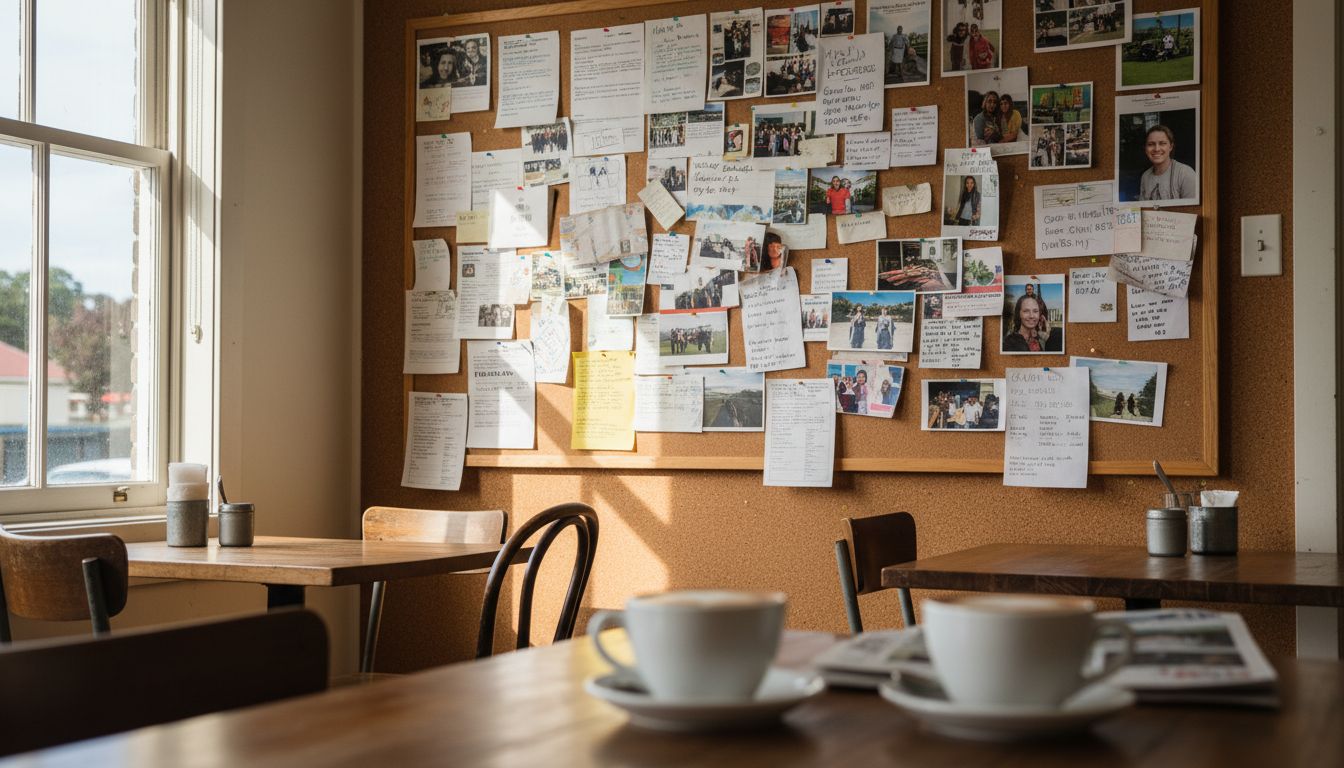
Somewhere between the third flat white and the second Pilates class, the community noticeboard came back. Not the sad cork slab with a curling guitar lesson ad. I’m talking about the aggressively curated, colour-coded, weirdly intentional boards popping up in cafés, bakeries and small-town cinemas across Aotearoa. They are not nostalgic. They are strategic.
In Grey Lynn, a bakery called Daily Crumb has a noticeboard divided into themes. “Water Sports, But Make It Niche.” “Clubs That Meet Before 7am.” “Workshops Involving Fire.” The owner told me she turns away anything too vague. No “life coaching.” No “business networking.” You want a spot? You bring a pottery class that only makes salt pigs. Or a Tuesday night knife sharpening collective. The board is full every week. People photograph it. They come back to check it. It has become programming.
In Wellington, a tiny cinema called Lantern Yard installed a pegboard wall and started hosting what they call Trailer Night, except the trailers are for local projects. Five slides. Ninety seconds. A sign-up sheet on the counter. The pegboard fills with postcards and hand-drawn flyers the next day. No paid placements. No glossy posters. Just texture and intent. The cinema owner told me ticket sales bump the week after Trailer Night. Not because of one film. Because people feel looped in.
Here’s what’s happening. Brands that operate at street level are realising attention is not scarce, belonging is. A noticeboard is slow media. It requires friction. A pin. A piece of paper. A decision. It rewards the specific. The strange. The hyper-local. In 2026, that feels radical. We have spent a decade trying to scale everything. Meanwhile, the most magnetic marketing move in the room might be a corkboard and the courage to say, this is for us.
In Grey Lynn, a bakery called Daily Crumb has a noticeboard divided into themes. “Water Sports, But Make It Niche.” “Clubs That Meet Before 7am.” “Workshops Involving Fire.” The owner told me she turns away anything too vague. No “life coaching.” No “business networking.” You want a spot? You bring a pottery class that only makes salt pigs. Or a Tuesday night knife sharpening collective. The board is full every week. People photograph it. They come back to check it. It has become programming.
In Wellington, a tiny cinema called Lantern Yard installed a pegboard wall and started hosting what they call Trailer Night, except the trailers are for local projects. Five slides. Ninety seconds. A sign-up sheet on the counter. The pegboard fills with postcards and hand-drawn flyers the next day. No paid placements. No glossy posters. Just texture and intent. The cinema owner told me ticket sales bump the week after Trailer Night. Not because of one film. Because people feel looped in.
Here’s what’s happening. Brands that operate at street level are realising attention is not scarce, belonging is. A noticeboard is slow media. It requires friction. A pin. A piece of paper. A decision. It rewards the specific. The strange. The hyper-local. In 2026, that feels radical. We have spent a decade trying to scale everything. Meanwhile, the most magnetic marketing move in the room might be a corkboard and the courage to say, this is for us.