Revenge of the Roundabout Flamingo
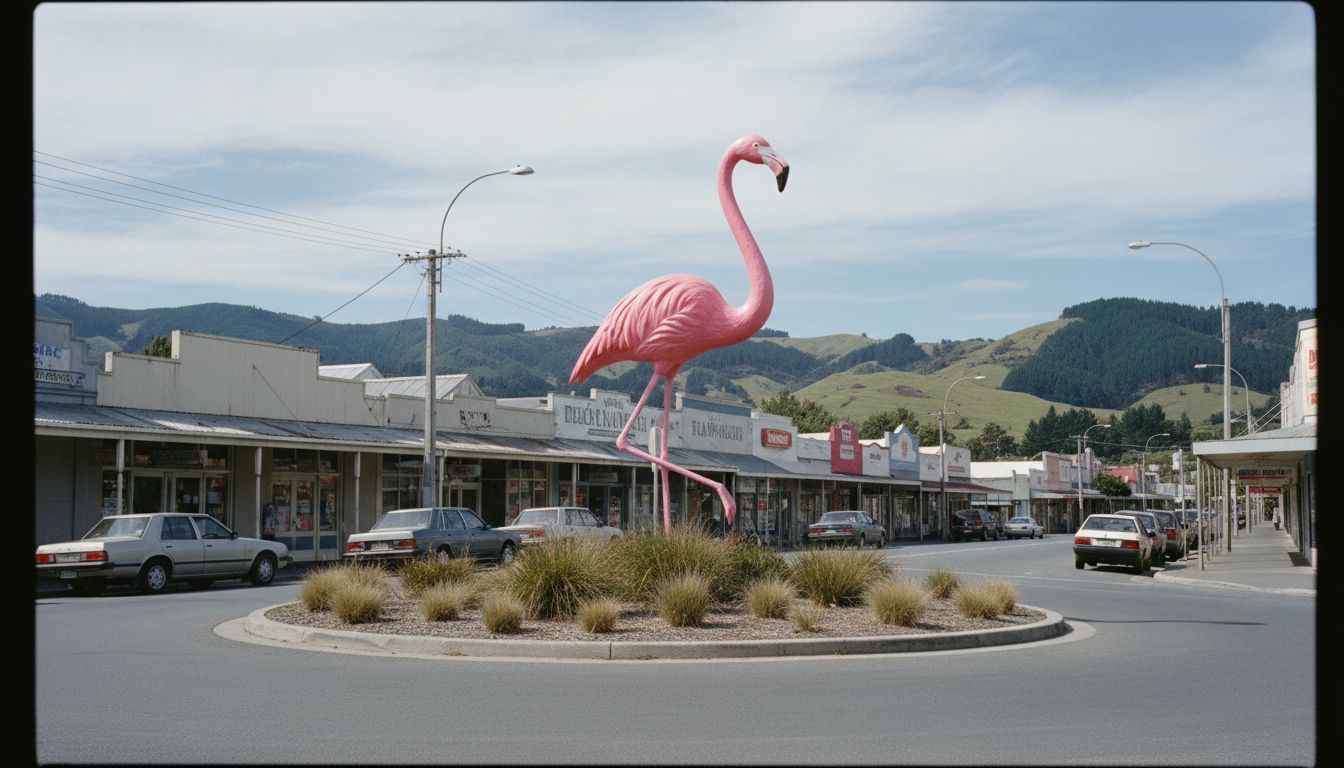
Somewhere between Tirau and anywhere else, a fibreglass flamingo is starting a turf war.
If you have driven through the lower North Island lately, you will have noticed it. Not the traffic. The roundabouts. They have become galleries. One town has installed a seven-metre trout leaping heroically toward nothing in particular. Another has gone for a stainless steel kōtare with wings like kitchen knives. And then there is the flamingo. Bright. Unapologetic. Slightly cross‑eyed. It stands in the middle of a perfectly respectable farming district as if it took a wrong turn at Miami and decided to stay.
Here is the thing. These sculptures are no longer decoration. They are strategy. Councils will deny it, but the brief is obvious, make something that gets shared in the family group chat. The roundabout has become the new front page. You have exactly nine seconds at 30 kilometres an hour to make an impression before someone indicates right without warning. That constraint is delicious. It forces clarity. No committee waffle. No layered meaning about resilience and heritage. Just a giant flamingo daring you not to smile.
The towns that get it right understand scale and silhouette. The trout works because it is absurdly athletic. The kōtare works because it looks like it could take your eye out. The flamingo works because it should not exist there at all. It creates a question, which is the purest form of marketing. Why is that here. What else is here. Suddenly you are pulling over for a pie, then a coffee, then you are telling people about the place with the bird. We talk endlessly about destination branding as if it lives in strategy decks. In 2026, it lives in the middle of an intersection, painted pink, legs bolted into concrete, refusing to be ignored.
More of this please. Fewer safe bronze farmers leaning on shovels. If we are going to spend the money anyway, let it be bold. Let it be slightly ridiculous. Let it give the kids in the back seat something to argue about. Because in a country stitched together by long drives, the roundabout has quietly become our most democratic stage. And right now, the flamingo is winning.
If you have driven through the lower North Island lately, you will have noticed it. Not the traffic. The roundabouts. They have become galleries. One town has installed a seven-metre trout leaping heroically toward nothing in particular. Another has gone for a stainless steel kōtare with wings like kitchen knives. And then there is the flamingo. Bright. Unapologetic. Slightly cross‑eyed. It stands in the middle of a perfectly respectable farming district as if it took a wrong turn at Miami and decided to stay.
Here is the thing. These sculptures are no longer decoration. They are strategy. Councils will deny it, but the brief is obvious, make something that gets shared in the family group chat. The roundabout has become the new front page. You have exactly nine seconds at 30 kilometres an hour to make an impression before someone indicates right without warning. That constraint is delicious. It forces clarity. No committee waffle. No layered meaning about resilience and heritage. Just a giant flamingo daring you not to smile.
The towns that get it right understand scale and silhouette. The trout works because it is absurdly athletic. The kōtare works because it looks like it could take your eye out. The flamingo works because it should not exist there at all. It creates a question, which is the purest form of marketing. Why is that here. What else is here. Suddenly you are pulling over for a pie, then a coffee, then you are telling people about the place with the bird. We talk endlessly about destination branding as if it lives in strategy decks. In 2026, it lives in the middle of an intersection, painted pink, legs bolted into concrete, refusing to be ignored.
More of this please. Fewer safe bronze farmers leaning on shovels. If we are going to spend the money anyway, let it be bold. Let it be slightly ridiculous. Let it give the kids in the back seat something to argue about. Because in a country stitched together by long drives, the roundabout has quietly become our most democratic stage. And right now, the flamingo is winning.